Welcome to Week 1 of the
National Safety Series 2026
PROUDLY SPONSORED BY

The OzRunways team includes Australian pilots who understand the unique challenges of flying in Australia. They proudly support the recreational aviation community and are committed to improving safety standards through national safety initiatives. Their EFB tools, with a strong focus on weather, traffic and NOTAMs, are essential for pilots at all skill levels.
OzRunways makes it easy for pilots to access important safety information before and during every flight. With intuitive tools designed for Aussie conditions, they make flying simpler and, most importantly, safer.
Read on, improve your safety initiatives, and participate to win!
Flight Planning
Every safe flight begins long before the engine starts. Whether it is a local flight from a familiar airfield or a cross country trip somewhere new, the decisions made before departure often have the biggest influence on how the flight unfolds.
Flight planning is sometimes treated as an administrative task or something only required for longer flights. In reality, every flight benefits from planning. At its simplest, flight planning is about reducing surprises. Before every flight, pilots should take time to step back and consider the whole operation, not just the route.
Start with yourself.
Are you fit to fly today? Have you genuinely considered IMSAFE, or are you pushing ahead because the conditions look good and the aircraft is ready?
Then consider capability.
Do you hold the appropriate qualifications and endorsements? Are you current, proficient and comfortable for the conditions and destination?
Next comes the aircraft.
Has a proper pre-flight inspection been completed? Is maintenance current? Are there operational limitations or serviceability items that could affect the flight?
Then move outward.
What weather is expected not just at departure, but enroute and at destination? What airspace requirements, radio procedures or operational considerations apply? Have you reviewed NOTAMs and considered alternate options?
Finally, think about the route itself.
Not simply where you are going, but whether the route is practical and appropriate for the conditions, terrain, workload and available options if things change.
Good flight planning is not about creating complexity. It is about creating capacity. Every decision made on the ground reduces workload in the air and leaves more cognitive ability to aviate, navigate and communicate.
The reality is that many situations we experience in flight are not completely unexpected. Weather develops, conditions change and plans evolve. Effective flight planning gives us more time, more options and better decisions when they do.
Because the goal of flight planning is not to predict every problem. It is to avoid being surprised by the predictable.
CASA Pilot Quiz
Think you’ve got flight planning down to a fine art? Have a crack at CASA’s Fixed Wing Flight Planning Quiz and see how your knowledge stacks up.
Flight Without Fuel
There is an old saying in aviation that the three most useless things are the runway behind you, the altitude above you, and the fuel left on the ground.
Running low on fuel, or running out entirely, remains one of aviation’s most preventable emergencies. Despite advances in aircraft capability, planning tools and technology, pilots continue to find themselves operating with less fuel margin than intended.
Once fuel stops reaching the engine, the situation changes quickly and options become limited.
The challenge then for many, is that forced landings are not something most pilots practise regularly. For many recreational pilots, the last time may have been during training or a flight review. When combined with surprise and time pressure, valuable decision making time can disappear quickly and rushed actions can follow.
Fuel reserves are not carried simply because regulations require them. They are carried to provide options when things do not go to plan and, ultimately, to help ensure we arrive home safely.
Not all fuel problems mean empty tanks
Fuel related engine failures generally fall into two categories: fuel starvation and fuel exhaustion. Fuel starvation occurs when fuel is onboard but cannot reach the engine. This may be due to contamination, a mechanical issue, incorrect fuel selection or fuel system management.
Fuel exhaustion occurs when there is no usable fuel remaining and, in many cases, comes back to planning, monitoring or decision making. Different causes. Same outcome. If fuel is not reaching the engine, the prop stops.
The rules give us minimums, not targets
Before getting into planning techniques, it is worth understanding the baseline requirements. CASA requires fuel carried for flight to be suitable, uncontaminated and of the correct type. Incorrect fuel, or contamination entering the system, can create problems long before quantity becomes an issue.
Simple habits remain important. Use reliable fuel sources, check fuel quality and drain tanks as required before flight and after refuelling.
The Visual Flight Rules Guide remains a useful plain English reference. CASR 91.465 deals with fuel quality and suitability, while the Part 91 MOS sets out reserve fuel requirements.
For most VFR operations in aircraft below 5,700 kg, pilots are required to carry a minimum of 30 minutes final reserve fuel. That does not mean planning to land with 30 minutes remaining. Minimums are exactly that.
Planning starts before engine start
Fuel planning is rarely as simple as filling the tanks and going. Unlike a car, carrying extra fuel in an aircraft comes with a weight penalty. One day you may fly solo and carry full fuel. On another, with a passenger, baggage or warmer conditions, that may no longer be possible while remaining within limits.
That changes the range available to you. Good planning starts with understanding how much fuel is actually onboard. Wherever possible, this should be confirmed using more than one method.
You also need to know the aircraft’s expected fuel burn. Your pilot operating handbook should be used to understand consumption rates and recognise that these change depending on aircraft configuration and operation.
Subtract the reserve fuel you do not intend to use and calculate your available flight time from what remains.Then consider expected ground speed and whether the planned distance still works with an appropriate margin.
Keep in mind that calculations are only part of the picture. Winds, climb performance, circuit delays, weather and changes to routing can all affect the final outcome.
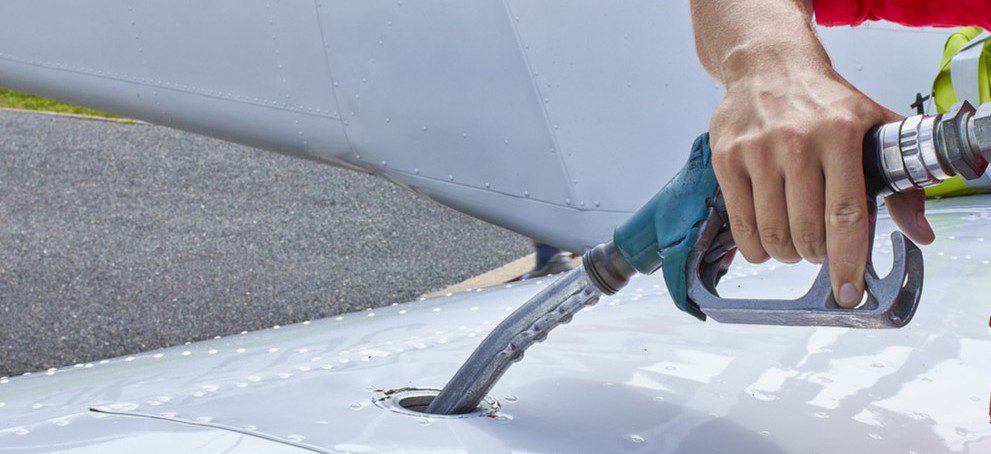
Reserve fuel Is not spare fuel
Reserve fuel exists for circumstances that were not part of the original plan. Unexpected headwinds, weather deviations, holding, traffic delays or a runway closure can quickly reduce your available margin. Reserve fuel should not be treated as usable trip fuel.
Plan to arrive with it intact. If your fuel situation starts becoming uncomfortable, speak up early. A timely call can often prevent the situation from becoming critical. If required, declare an emergency.
Weather changes the plan
Weather has a direct impact on fuel planning. Headwinds increase flight time and reduce range. Weather avoidance may necessitate the need to travel further. Conditions at destination may require holding or diverting. That means poor or uncertain weather generally requires more margin, not less. Sometimes the safest fuel decision is simply making an earlier stop and topping up.
Running out of fuel, or becoming critically low on fuel, is reportable. But reporting is not the real consequence. Fuel exhaustion can lead to an off field landing, aircraft damage, injury or worse.
In many cases, these events are avoidable through better planning, earlier decisions and maintaining comfortable margins. Fuel planning is not paperwork. It is one of the simplest ways to protect the flight, protect the aircraft and make sure everyone gets home safely.

Do We Need To Be There?
There is something about flying lower that can feel appealing.
- A better view.
- Following a river or coastline.
- Taking a closer look at a property.
- Staying underneath weather.
- Flying over familiar ground.
Sometimes the decision is deliberate. Sometimes it happens gradually. A few hundred feet lower may not feel significant from the cockpit, but every foot lower reduces the margin available if something changes.
Last year, a significant proportion of fatal recreational aviation accidents involved aircraft operating at low level. The common factor was not severe weather or aircraft failure. More often, aircraft were operating close to terrain with limited time and limited options remaining.
Low level operations are specialised operations. They are not simply normal flying conducted closer to the ground. As height reduces, time, options and recovery opportunities reduce with it. For most recreational flying, operating lower than necessary rarely provides additional safety benefit. Which raises an important question. Do we need to be there?
How pilots end up lower than intended?
When pilots hear the term low level flying, many think of intentional low passes or dramatic manoeuvring. In reality, a pilot may find themselves operating at low level much earlier than expected.
Low level flying generally refers to operating below prescribed minimum heights and, depending on the aircraft, operation and environment, may require specific approvals, permissions or training.
As a general rule:
- Over non populous areas, aircraft are generally expected to remain at least 500 ft above ground level (or 300 ft in a Powered Parachute)
- Over populous areas, aircraft are generally expected to remain at least 1000 ft above ground level
For many recreational pilots, low level operations below standard minimum heights are generally limited to a small number of specific situations, including:
- Take off and landing
- Approved training
- Operations over land owned or controlled by the pilot
- Operations conducted with the permission of the landowner
Meeting one of these circumstances does not automatically mean low level operations are permitted. Minimum operating heights and associated conditions may vary depending on the aircraft and operation, so pilots should ensure they understand the requirements that apply before operating at low level.
What actually counts as low level flying?
Very few pilots take off intending to conduct unsafe low level operations. Instead, it often starts with good intentions. I know this area. I will stay underneath this weather. I just want a better look. I will only drop a little lower.
The challenge is that low level environments reduce your tolerance for error. A decision that feels small at 2,500 feet can become significant at 300 feet.
Below 500 feet things change quickly
The biggest difference is not aircraft performance. It is margin. At altitude, problems often give you time. Time to recognise. Time to decide. Time to recover.
Closer to the ground:
- Engine issues become urgent
- Forced landing options reduce, Turns require greater discipline
- Terrain and wind effects become more pronounced
- Visual cues change,
- Hazards appear later than expected
One of the most significant hazards is wires. Wires are difficult to identify from the air and rarely stand out against terrain, vegetation or changing light conditions. Unlike towers or buildings, they can remain effectively invisible until they are already close.
And wires are rarely the only hazard. Trees. Terrain. Bird activity. Power infrastructure. Unexpected obstacles. And in more recent years, drone activity. Many low level occurrences occur in daylight, in good weather and in areas familiar to the pilot. That familiarity can become part of the trap.
There is a reason minimum heights exist
Minimum heights are not arbitrary numbers. They exist to create margin. Margin provides:
- Time to respond
- Options during an emergency
- Greater opportunity to identify hazards
- Additional capacity to manage workload and decision making
Low level operations are a specialised environment that require planning, discipline and training. For most recreational flying, lower rarely creates additional safety.
Ask yourself
Before descending lower than necessary: Why am I choosing to fly lower? Am I trained and permitted to operate in this environment? What hazards have I not identified? If the engine stopped right now, where would I go? If something changed in the next ten seconds, what options would remain?
Because sometimes the safest decision a pilot can make is simply staying higher. Every flight involves decisions. Most end uneventfully. But every time we reduce margin, we increase reliance on everything continuing exactly as planned.
Aviation has a habit of reminding us that plans can change quickly. So before descending lower than necessary, ask yourself one final time. Do we need to be there?

Continue Learning
How many of the decisions in this article felt familiar? The ATSB publication Avoidable Accidents No. 1 — Low-level flying explores how small decisions can compound and how quickly safety margin can disappear close to terrain. See whether the themes sound familiar.
It Doesn’t End There
When aviation events occur, our conversations naturally focus on what happened and how to prevent it happening again.
We review weather, qualifications, aircraft performance and operational decisions. We look for lessons, identify contributing factors and consider what could be done differently in future. That process matters. Learning from events is one of aviation’s greatest strengths and has shaped many of the improvements we now take for granted.
But there is another side of aviation events that receives far less attention. Not what happened to the aircraft, but what happened afterwards.
Aviation events can affect more than those directly involved. Family members, friends, witnesses, instructors, emergency responders and flying communities may all experience events differently and carry them in different ways.
New Zealand pilot Pete Blake has previously reflected on the impact of witnessing the fatal accident of a close friend and colleague and the effect it had on him afterwards. What stands out is not discussion about aircraft performance or technical causes. It is the reminder that aviation events do not always end when the aircraft stops moving.
As pilots, we naturally think about risk in terms of ourselves and the operation we are conducting. Am I current? Am I qualified? Is the aircraft serviceable? Do the conditions support the flight?
These are important questions and they should remain central to good decision making. But aviation decisions are rarely carried by one person alone.
Every flight also affects the people around us. The people expecting us home, the people who trust our decisions and sometimes the people who may unexpectedly become part of the event.
This is not about avoiding challenge or suggesting aviation should become risk free. Aviation has always involved making decisions in dynamic environments and accepting that uncertainty can never be completely removed.
But preserving margin is not only about protecting the aircraft. Sometimes it protects opportunities. The opportunity to continue flying. The opportunity to share aviation with others. The opportunity to come back tomorrow.
Perhaps there is value in occasionally asking one additional question alongside all the others. Not only whether I am comfortable accepting this risk. But who else may be accepting it with me.
Because when things do go wrong, the impact rarely stops with the aircraft. It doesn’t end there.
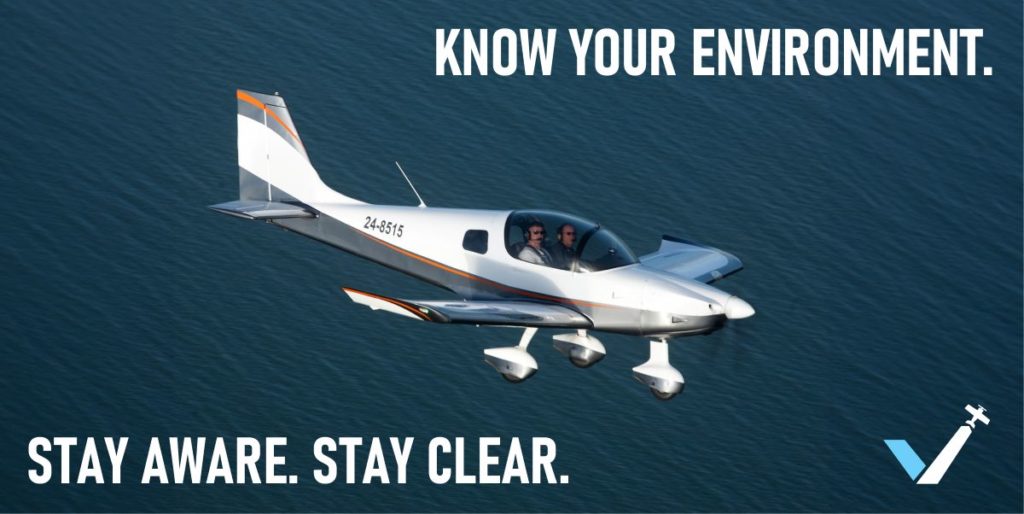
Know Your Environment
Airspace related occurrences continue to highlight the importance of preparation, situational awareness and sound decision making. Throughout the year, RAAus has seen an increase in airspace related occurrences, including airspace infringements involving entry into controlled airspace. These events rarely involve pilots intentionally operating where they should not.
More often, they involve changing conditions, increasing workload, reduced situational awareness, or assumptions that the original plan still works.
For most RAAus pilots, controlled airspace is generally not available as part of normal operations unless additional pilot and aircraft requirements are met.
That makes understanding where controlled airspace exists, and planning to remain clear of it, an important part of every flight.
Most airspace issues start before take off
When airspace related occurrences are reviewed, common themes often emerge:
- Flight planning was rushed or incomplete
- Airspace surrounding the route was not fully considered
- Charts or planning information were outdated
- Conditions changed and the plan was not adjusted
- Workload increased and situational awareness reduced
Airspace infringements are rarely the result of one major mistake. More often, they develop through several small decisions that gradually reduce available options until pilots find themselves somewhere they never intended to be.
Good preparation creates time, options and margin before that happens.
Understand the environment
Before every flight, take time to consider:
- Controlled airspace relative to your route
- Aerodrome activity and likely traffic flows
- Prohibited, Restricted or Danger Areas
- Relevant NOTAMs
- Terrain and weather impacts
- Alternates if conditions change
Where practical, avoid planning directly along boundaries and leave yourself margin. Airspace awareness is not about memorising charts.
It is understanding enough about the operating environment that your position never becomes a surprise.
See it in practice
Understanding airspace is easier when you can visualise it. OzRunways has provided a practical walkthrough showing how to use PRD overlays and airspace information within the platform to better understand operating restrictions and improve situational awareness during planning.
Technology supports awareness
Electronic Flight Bags have changed the way many of us plan and operate. Used well, they can improve situational awareness, support pre flight planning and reduce workload. But they still rely on pilots understanding what they are looking at.
Airspace is more than a line on a screen. Vertical limits, airspace status, operating hours and surrounding airspace all matter. Technology should support decision making, not replace it.
Build a better briefing habit
Reviewing NOTAMs before flight helps reduce surprises and may highlight changes that affect your route, destination or planned operation. OzRunways has also provided a short walkthrough on checking NOTAM information for a planned flight.
Further Reading
One Final Checkpoint
If you made it this far, there is one final challenge. Follow the link below, answer one quick question and enter your details if you would like to go into the draw.*
Whether you use paper charts, electronic tools, or a combination of both, understanding the environment remains the pilot’s responsibility.
PARTICIPATE TO WIN!
YOU COULD WIN THE FOLLOWING PRIZE*
iPad Mini 128GB + OzRunways Subscription
Sponsored by RAAus and OzRunways
Valued at $1,298

*Applicants must hold a current Flying Membership or Non-Flying Membership in order to win the prize.