Welcome to Week 2 of the
National Safety Series 2026
PROUDLY SPONSORED BY


PARTICIPATE TO WIN!
YOU COULD WIN ONE OF THE FOLLOWING PRIZES*
1st Prize – Garmin Portable ADS-B Receiver GDL 50
Valued at $1,420
2nd Prize – Garmin Aviator Smartwatch D2 AIR X15
Valued at $1,100
3rd Prize – OzRunways Subscription
Valued at $219

*Applicants must hold a current Flying Membership or Non-Flying Membership in order to win the prize.
Non-Controlled Aerodromes
Safe operations at non-controlled aerodromes start with preparation, clear communication and an effective lookout. These aerodromes range from quiet airfields with a single runway to busy airports with intersecting runways and several aircraft in the circuit. With much of our flying taking place in this environment, this part of our National Safety Campaign offers practical information and tips to help you arrive prepared and fly with strong airmanship.
Prior Planning Prevents Poor Performance…
When planning to fly to any aerodrome, preparation is essential. A commonly heard phrase around flying schools and aero clubs is “prior planning prevents poor performance…”occasionally with an additional word or two added.
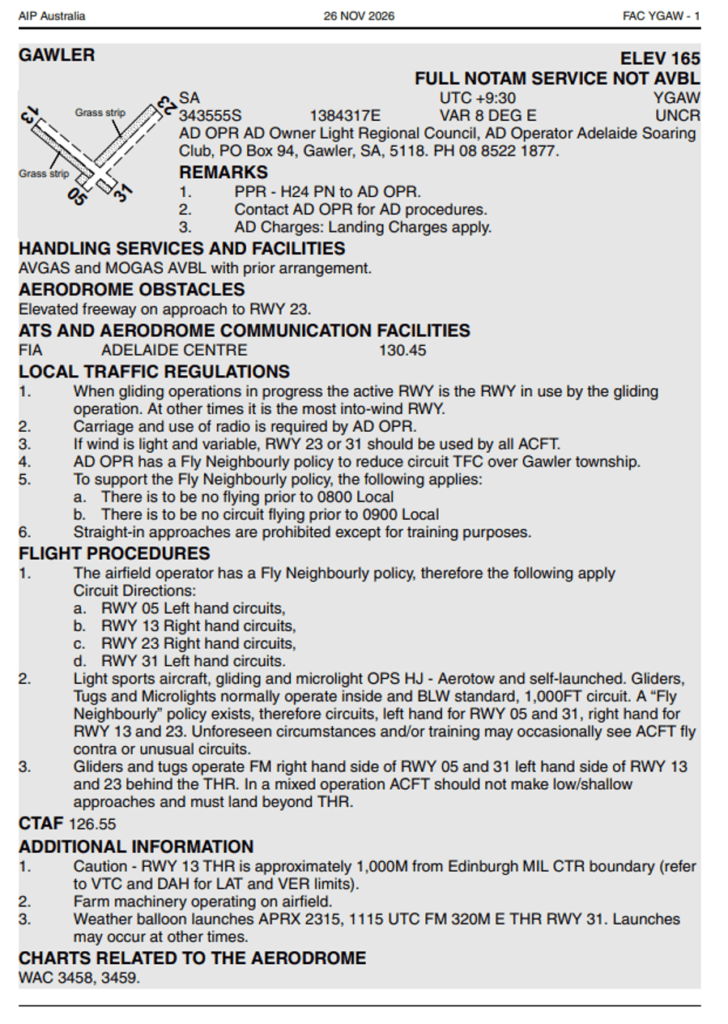
The ERSA ,NOTAMs and appropriate charts MUST be checked prior to departure. By studying these documents, you are setting yourself up for success. Important items such as preferred operating runways, circuit direction, airfield elevation, and radio frequencies are all listed in the ERSA, and the NOTAMs details of operational restrictions and temporary changes. This will lead to a less stressful flight as you are reducing uncertainty.
Many experienced pilots would have either heard of or witnessed aircraft flying the incorrect circuit direction at non-controlled aerodromes. It can happen to students, private pilots and experienced pilots too. In many cases it comes down to not checking circuit direction during pre-flight planning. Have a look at the ERSA and note the circuit direction for each runway. It can be confusing at first, and may require you to draw a diagram. This kind of ground work helps your brain create an image of the runways and circuit directions which can then be used in flight.
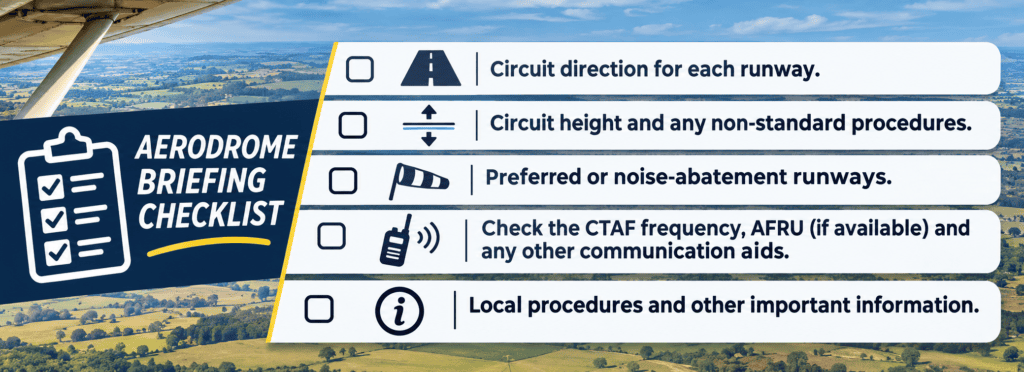
Next time you plan a flight, make sure you check the ERSA and tick all the boxes before departure. Doing so can significantly reduce workload and surprises once airborne. This way you can enjoy your flying more!
RADIO COMMUNICATION
Improve situational awareness for yourself and others
Using the radio wisely involves not speaking too much, or too little ensuring that your intended message is conveyed correctly. When approaching a non-controlled aerodrome, listening to broadcasts can help build a mental picture of where other aircraft are likely to be. Making radio calls helps improve situational awareness for all aircraft operating in the vicinity. That being said, there is no guarantee that every aircraft will be monitoring the correct frequency, transmitting, or even equipped with a radio.
If you make a radio call and don’t hear a response, maintain an effective lookout and assume there may still be traffic present. Sometimes you may not hear another aircraft, but you will see them.
Before transmitting, check the selected frequency and radio volume, then listen to make sure another station is not already transmitting. Use standard phraseology to help other pilots understand your position and intentions. Keep the message clear and concise, with the information they need to build their traffic picture. The following format sets out the key elements:
[Location] traffic, [Aircraft type] [Call sign], [Position, level, intentions], [Location]
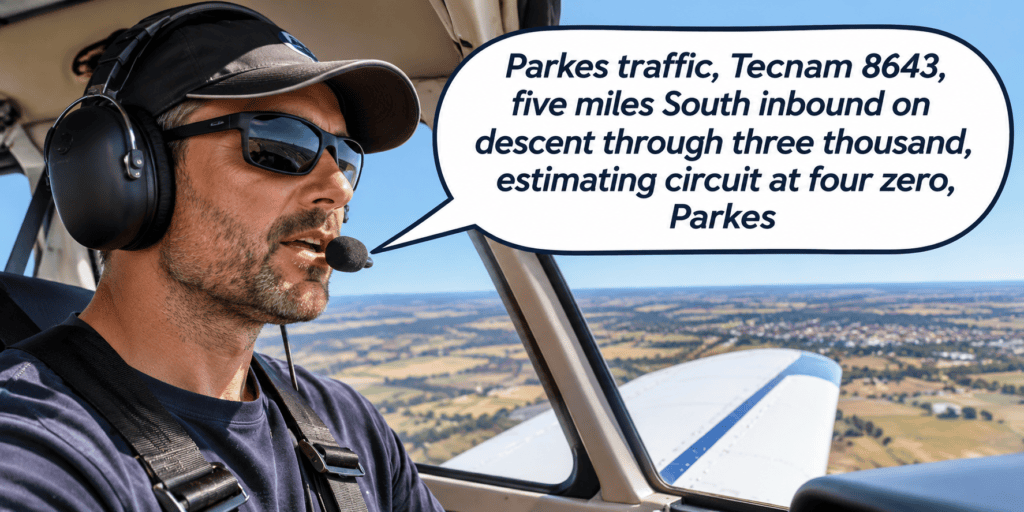
This provides enough information for other aircraft in the area, and if you imagine yourself hearing that broadcast while in the circuit, it allows you to be prepared for the entry of additional traffic.
BE CLEAR AND SUCCINCT.
Have a plan
As you approach the aerodrome, it’s important to have a plan for how you intend to join the circuit. That plan should not be made once you’re overhead the aerodrome. It should be developed well before arrival, based on the runway you expect to use, the aerodrome layout, known traffic, weather conditions and any relevant procedures published in ERSA.
Ask yourself:
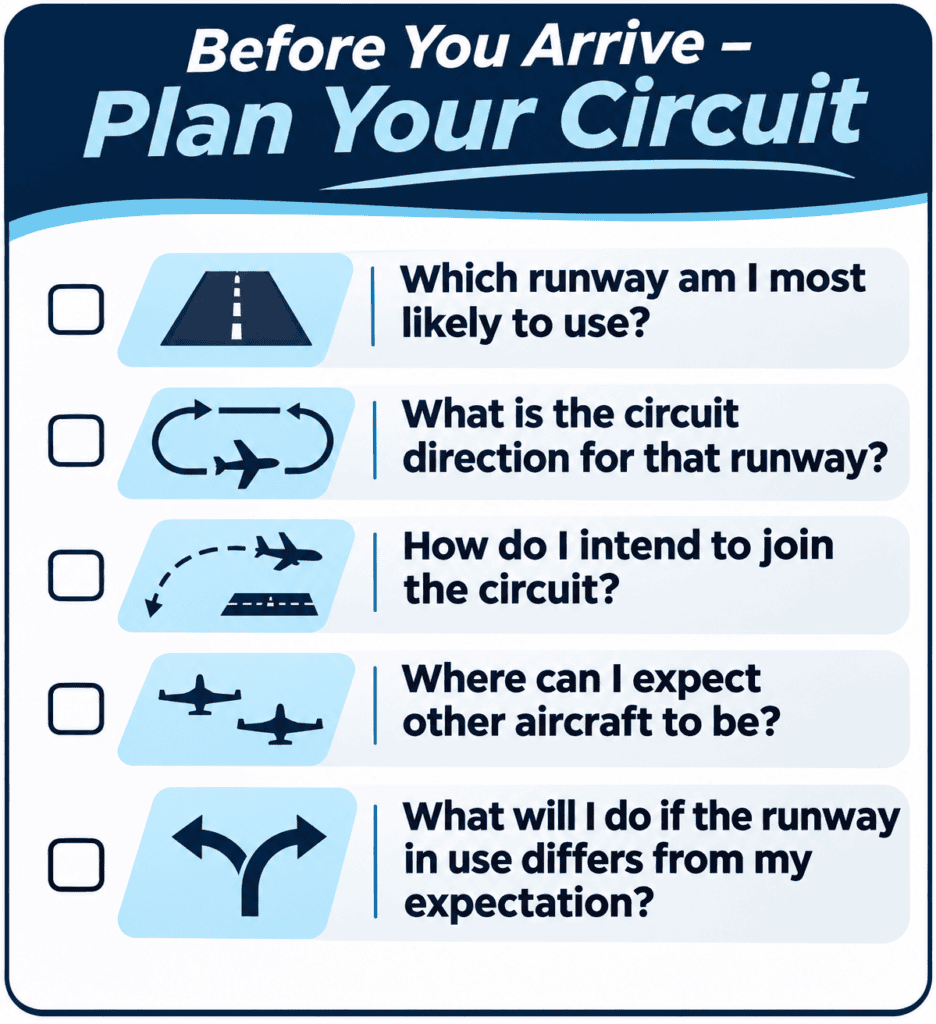
Having a plan will reduce workload at a critical stage of flight and make it easier to adapt if circumstances change.
A useful technique is to build a mental picture of the circuit before reaching the aerodrome.
If Runway 27 is likely to be in use with a left circuit, where would aircraft on downwind, base and final be located? If another pilot reports joining crosswind or turning downwind, can you immediately picture where they are likely to be?
Pilots who can visualise the circuit are often better able to identify potential conflicts and join the circuit safely with other traffic.
During the pre-flight planning phase, many pilots draw the aerodrome diagram and an arrow to indicate their intend track to the runways. Using this diagram in flight they can match the runways to what they see in front of them and already have the circuit joining technique planned and visualised.
Be prepared, but flexible
Conditions at the aerodrome may differ from what you expected during planning.
You may discover additional aircraft in the circuit, a runway different to the one you expected, parachuting activity, training operations, or other factors that require a different approach. A good plan should be flexible.
The objective is not to arrive with a fixed and unmovable intention, but to arrive with a starting point that can be safely adjusted as your understanding of the traffic situation develops.
Use all the tools available to you
Modern navigation systems can also assist in developing situational awareness. Applications such as OzRunways can display traffic information from ADS-B receivers, internet-sourced traffic data and participating OzRunways users, helping pilots build a more complete picture of other aircraft operating nearby. However, no traffic display will show every aircraft, and pilots should be careful not to become fixated on cockpit screens. Time spent looking at a tablet is time not spent looking outside.
The EFB
Electronic traffic information is best used to direct and support your visual scan, rather than replace it. If your display indicates traffic in a particular area, use that information to focus your lookout and positively identify the aircraft. Radio broadcasts, electronic traffic systems and visual lookout should all work together to build situational awareness, with see-and-avoid remaining the primary means of collision avoidance.
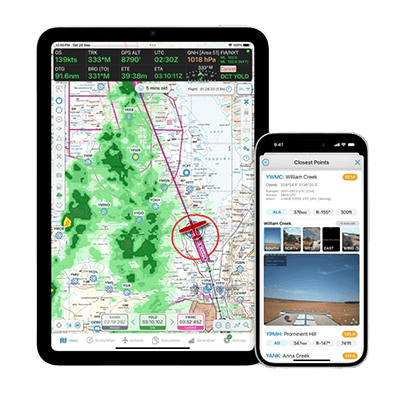
In OzRunways version 14 or later, ADS-B Internet Traffic is available with an Australia or New Zealand Plus. For setup instructions and limitations, see the Traffic chapter of the OzRunways user manual: https://docs.ozrunways.com/ozrunways/13_traffic.html.
For more information on OzRunways traffic awareness features, visit: https://www.ozrunways.com/au/products/adsb/
ADS-B receivers
An ADS-B receiver allows pilots to see other suitably equipped aircraft broadcasting their position, altitude, and track in real time, providing an additional layer of traffic awareness beyond visual scanning and radio broadcasts. This can be especially valuable when approaching or departing aerodromes without air traffic control, helping pilots build a clearer picture of local traffic patterns and identify potential conflicts earlier. While ADS-B should never replace see-and-avoid principles or standard radio procedures, it can be a useful supplementary safety tool for pilots regularly operating in shared airspace around non-controlled aerodromes.

For more information head to the Garmin website: https://www.garmin.com/en-AU/aviation/adsb-solutions
Remember
Planning, radio communication and electronic tools help build a mental picture of the traffic situation, but they should always be used to support an effective lookout. Continue to conduct an active scan, identify threats and develop a clear mental picture. Once you have developed that picture, you can decide how best to integrate with the circuit and enjoy the coffee at your destination.
A real world example
A member in a Savannah on a cross country flight was flying between 2 airports at 2500ft AGL. When overflying the first airport, they made a radio call with their location and intentions. Soon after, a Diamond aircraft was heard making a call stating they were overhead the second airport flying on a reciprocal track. While both pilots had broadcasted their position and intentions, no further radio calls were made and both aircraft came into close proximity several minutes later. The member in the Savannah had maintained a lookout and took evasive action to reduce a collision risk.
What could be done differently?
Further radio communication would have helped avoid a situation that put both pilots at risk. Clarification on position or reference to a landmark can help reduce uncertainty. In this case one extra radio call could have avoided the close call entirely. Technology could also provide information for an alerted see and avoid.
Often pilots are hesitant to speak up on the radio due to lack of confidence or embarrassment, especially at the start of their training. Remember, everyone was a student once.
PARTICIPATE TO WIN!
YOU COULD WIN ONE OF THE FOLLOWING PRIZES*
1st Prize – Garmin Portable ADS-B Receiver GDL 50
Valued at $1,420
2nd Prize – Garmin Aviator Smartwatch D2 AIR X15
Valued at $1,100
3rd Prize – OzRunways Subscription
Valued at $219
*Applicants must hold a current Flying Membership or Non-Flying Membership in order to win the prize.