FIRST IMPRESSIONS | GROUP G
A modern, stable and capable trainer – and a glimpse of the opportunities Group G can bring to recreational aviation.
By Marty Peters, Head of Flight Operations, RAAus | Flight conducted 26 August 2026
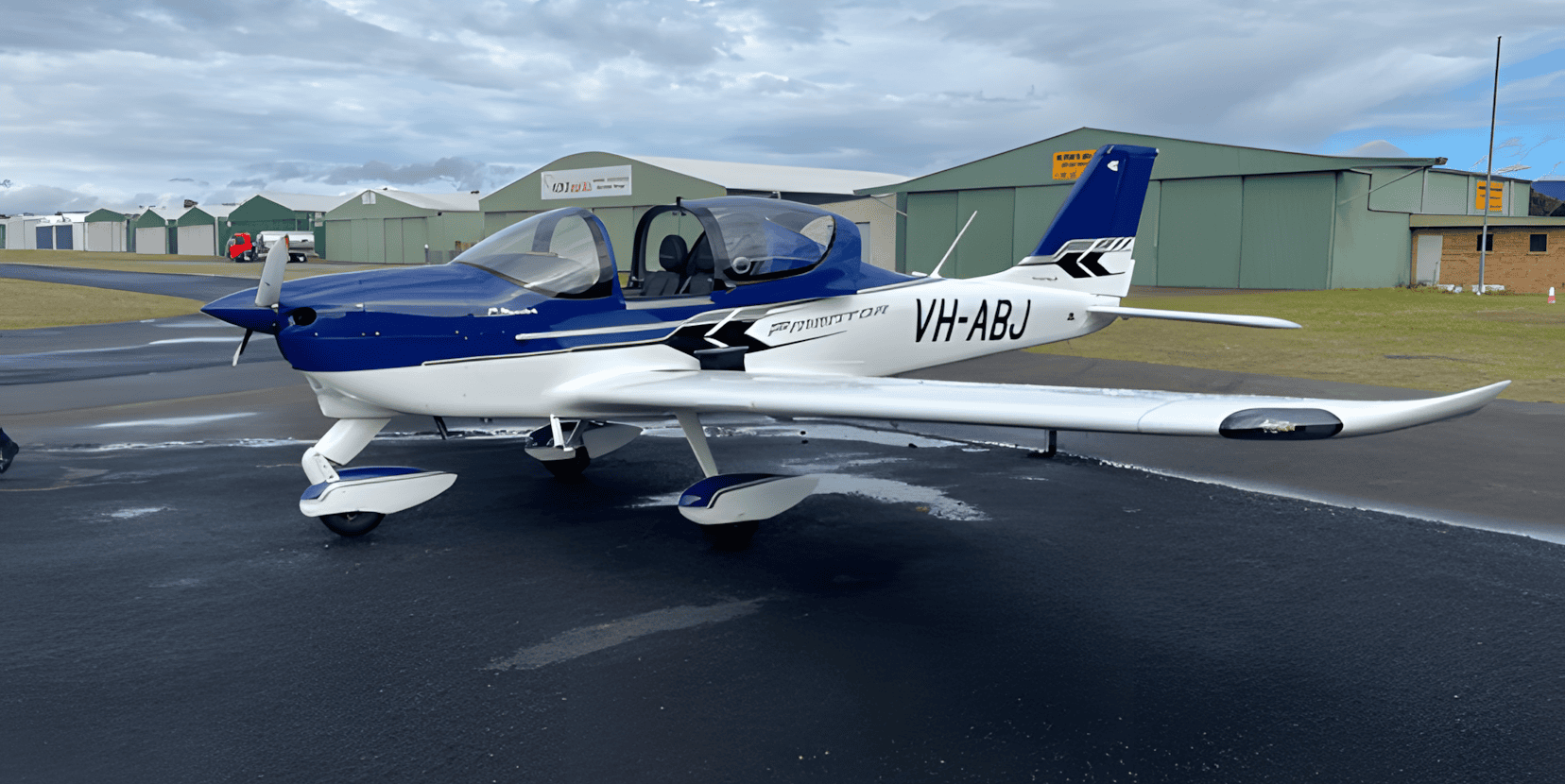
On 26 August 2026, Tecnam sales and service agent Bruce Stark offered me the wonderful opportunity to fly the Tecnam P-Mentor VH-ABJ. We departed Cessnock Airport (YCNK) and returned after 1.4 hours. From the walk-around to shutdown, it was an enjoyable introduction to an aircraft that combines familiar Tecnam thinking with a distinctly different mission.
Bruce also shared the fitting story behind the name. Tecnam began the P-Mentor program around the idea of a mentor as an experienced and trusted guide. The name also reflects the legacy of Professor Luigi Pascale – Tecnam co-founder, aircraft designer and teacher – whose guidance shaped the next generation of Tecnam engineers. It is an apt name for an aircraft intended to guide pilots from foundational skills into increasingly advanced training.
A familiar Tecnam feel, with a different purpose
The P-Mentor felt recognisably Tecnam from the moment I settled into the cockpit. The seating was comfortable, access to the flight controls was natural for either pilot or instructor, and the controls and switches were logically placed. As expected from a low-wing aircraft, the view was excellent. The slim canopy pillars make a real difference, opening the cockpit and providing a broad field of view.
It is also full of useful technology. The aircraft we flew featured ADS-B In and Out, an autopilot, a yaw damper and charging points for both USB and USB-C devices. The Rotax 912 iS fuel-injected engine and constant-speed propeller complete a modern package that feels sophisticated without being overwhelming.
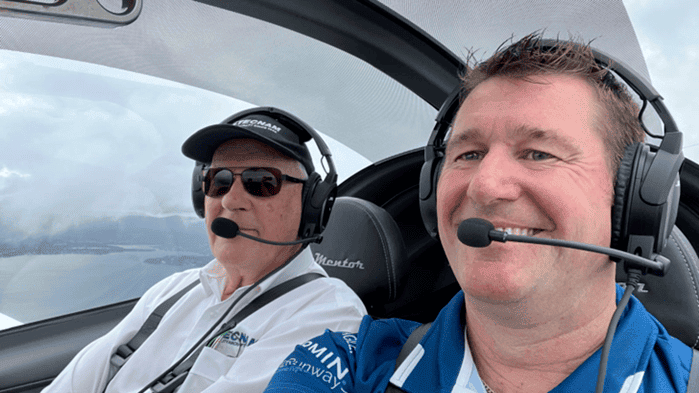
Bruce Stark and Marty Peters enjoying the P-Mentor flight from Cessnock.
Stability with a purpose
In flight, the standout impression was stability. The P-Mentor was developed as an IFR-capable training platform, and that design purpose is evident in its settled handling, precise response and avionics suite. For RAAus members, the reference to IFR is background about the aircraft’s design only: RAAus operations remain VFR, and the aircraft’s capability does not confer an IFR operating privilege.
The roll response is more measured than in the P92 or P2002. A look along the wing helps explain the difference: the P-Mentor’s large flap span leaves a comparatively compact aileron, supporting the steady character expected of this type of trainer. The climb is also more deliberate than the lighter Tecnam aircraft many of us know. That is not a shortcoming; it is a reminder to assess performance in the context of the aircraft’s weight, design and intended role.
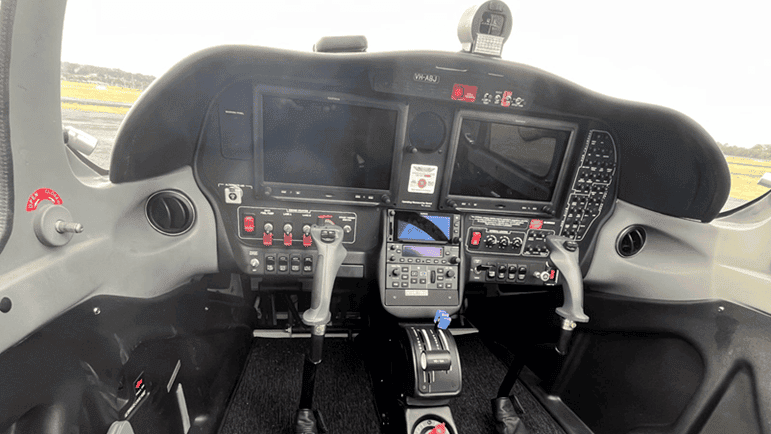
The cockpit combines modern avionics with clear access to the controls for pilot and instructor.
Performance in perspective
With a maximum take-off weight of 720 kg, the P-Mentor sits within the RAAus Group G weight range of 601 to 760 kg. Any RAAus operation would, of course, require the aircraft to meet the applicable Group G registration, airworthiness, maintenance and operating requirements, and the pilot to hold the relevant qualifications.
At up to 120 kg above the familiar 600 kg Group A limit, the P-Mentor should not be expected to perform exactly like a P92 or P2002. That would be like expecting a Drifter and a P2002 to perform the same way simply because both are recreational aircraft. Each has been designed for a different purpose, and each must be flown with its own performance, loading and handling characteristics in mind.
| Good airmanship begins with understanding the aircraft in front of you – not assuming it will behave like another aircraft with a familiar badge. |
General competency in practice
One of the things I enjoyed most about the flight was putting the general competency rule into practice: read the aircraft flight manual, understand the systems and limitations, complete the weight-and-balance and performance work, and then compare that knowledge with how the aircraft actually operates. Similarity to another Tecnam is helpful, but it is not a substitute for proper preparation and type familiarisation.
Overall, the P-Mentor was comfortable, stable, full of useful technology and genuinely enjoyable to fly. It does not try to be a P92 or a P2002, and it should not be judged as one. It is a purpose-built, heavier trainer with its own personality – and a compelling example of the broader range of aircraft that Group G can make accessible to RAAus members.
A sincere thank you to Bruce Stark for the invitation, the thorough aircraft briefing and the opportunity to experience the P-Mentor first-hand.
Flight and aircraft snapshot
| Flight | 1.4 hours, departing from and returning to YCNK on 26 August 2026 |
| Aircraft | Tecnam P-Mentor VH-ABJ |
| Powerplant | Rotax 912 iSc3, fuel injected, 100 hp, constant-speed propeller |
| Weights | 435 kg standard empty weight; 720 kg MTOW; 285 kg useful load |
| Fuel | 140 L total; approximately 132 L usable |
| Fuel burn discussed | Approximately 17-18 L/h cross-country and 14-15 L/h for local flying |
| Notable systems | ADS-B In/Out, autopilot, yaw damper, Glass cockpit with redundancy |
Technical note: Published and briefing figures are indicative. Performance and fuel consumption vary with aircraft configuration and operating conditions; the current approved aircraft flight manual for the specific aircraft takes precedence.