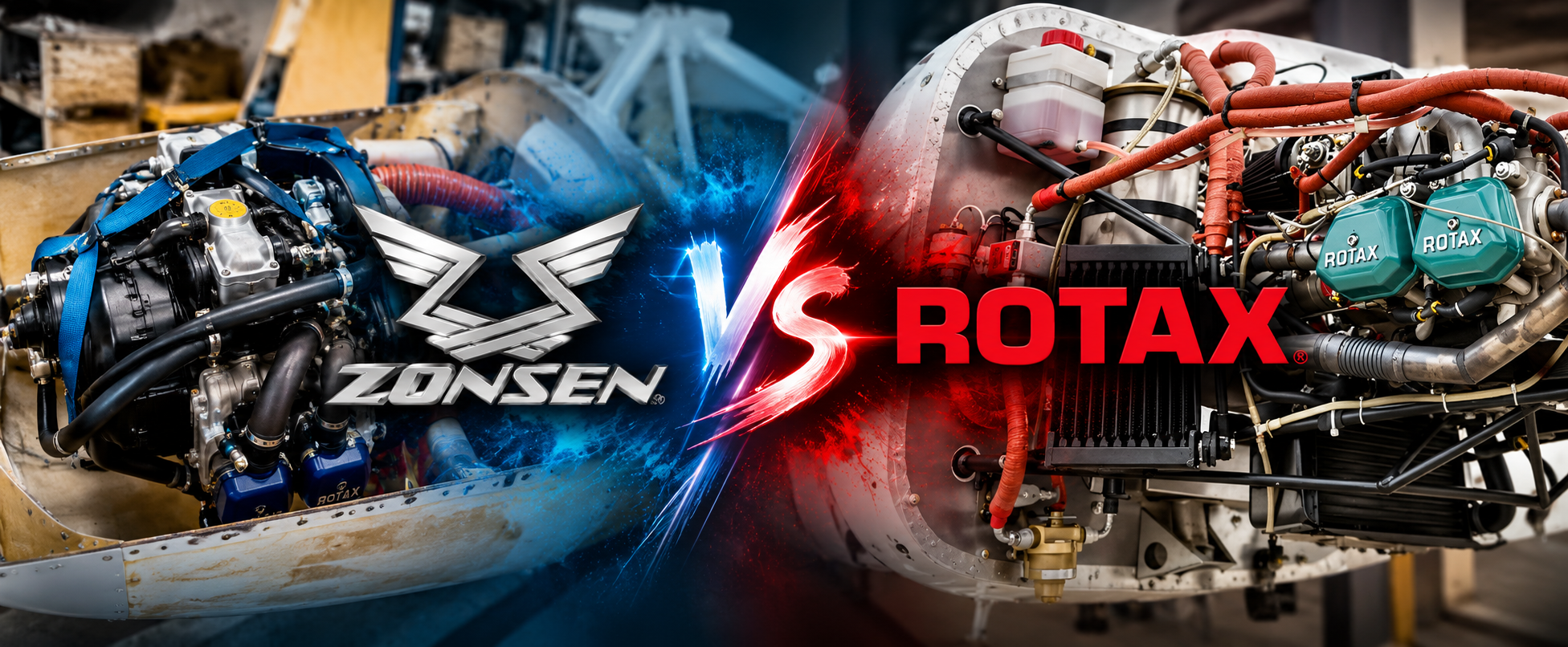
The arrival of the Zonsen CA510 into the Australian light-aircraft market provides aircraft owners and manufacturers with another potential four-stroke engine option. Rated at approximately 110 hp, the CA510 sits between the established Rotax 912 100 hp family and larger four-cylinder installations.
For RAAus aircraft owners, however, the question is not simply which engine produces more horsepower. Engine selection involves power-to-weight ratio, cooling, fuel and ignition systems, propeller reduction, installation requirements, maintenance support, available technical data and, importantly, the airworthiness basis on which the engine is installed.
Zonsen CA510
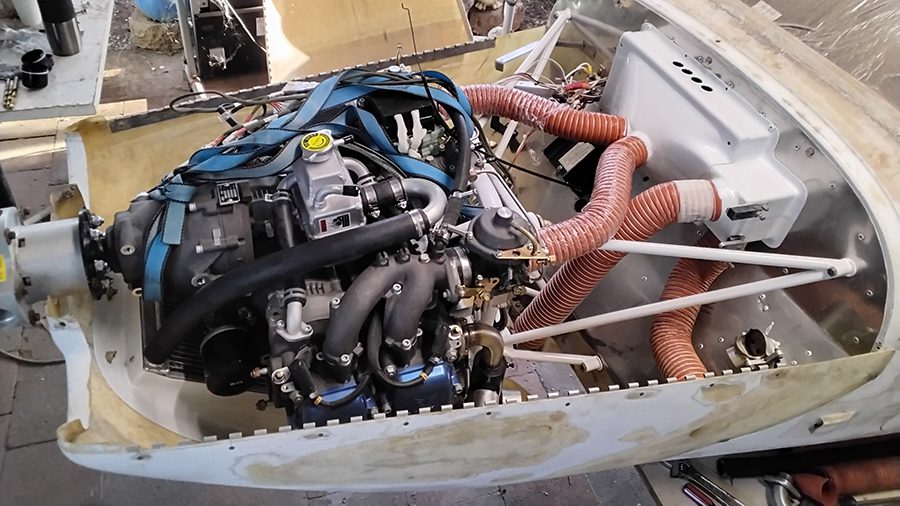
The CA510 is a four-cylinder, four-stroke aircraft engine marketed at approximately 110 hp. One feature that differentiates it from the conventional Rotax 912 installation is its fully liquid-cooled engine architecture. This means the installation relies on a dedicated coolant circuit and radiator rather than the combination of liquid-cooled cylinder heads and air-cooled cylinders used by the 912.
Full liquid cooling potentially provides good control of cylinder and head temperatures, particularly where the aircraft installation can provide consistent coolant airflow. The trade-off is that the aircraft installation becomes more dependent on the design, sizing and airflow characteristics of the radiator, coolant hoses, expansion system and associated plumbing.
This is particularly relevant to aircraft operating in Australia’s higher ambient temperatures. A correctly designed cooling system is therefore not simply an accessory to the engine; it becomes a significant part of the overall firewall-forward installation.
Australian installation work being undertaken on a Jabiru J160 has demonstrated that the CA510 can be packaged into an existing light-aircraft installation, although the installation requires consideration of the engine mount, propeller extension, radiator, oil cooling and associated firewall-forward equipment. These are installation-specific considerations rather than characteristics that should automatically be applied to every CA510 installation. (Aircraft Pilots)
Potential advantages
The principal attraction of the CA510 is its additional power. At approximately 110 hp, it provides around 10 percent more rated power than a 100 hp Rotax 912 ULS. In an aircraft where the additional power can be converted into useful climb performance or payload capability, this may be significant.
The fully liquid-cooled configuration is another potential advantage. Consistent temperature control can be beneficial, provided the cooling installation is properly engineered and validated.
There is also potential for the CA510 to provide increased competition in the light-aircraft engine market. Competition can encourage development in areas such as pricing, support, availability and installation options.
Considerations and disadvantages
The CA510 does not yet have the same length of service history and worldwide installed base as the Rotax 912 family. This is an important distinction when considering an aircraft engine. An engine’s serviceability is not determined solely by its initial performance; long-term reliability, component life, maintenance experience, parts availability and technical support all contribute to the overall operating picture.
For an Australian owner, the availability of local technical support and replacement components should therefore be considered before installation. The cooling system is also a significant consideration.
A liquid-cooled engine requires the radiator, coolant hoses, expansion tank, coolant quantity, airflow and ducting to be considered as part of the engine installation. Failure or degradation of any of these components can affect engine cooling.
The additional power must also be considered in relation to the airframe and propeller. Installing a higher-powered engine does not automatically mean that the aircraft can use the additional power without further assessment. Propeller selection, engine mount loads, vibration characteristics, cooling airflow, exhaust installation, fuel system capacity and aircraft weight and balance all require consideration.
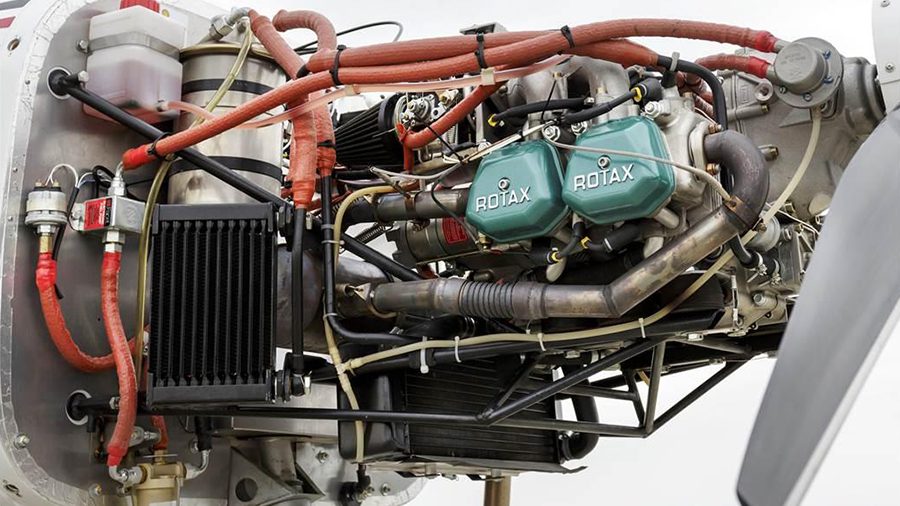
Rotax 912
The Rotax 912 family has been established in light aviation for many years and has become a common powerplant across the recreational and light-sport aircraft sectors.
The 912 ULS produces 100 hp at 5,800 rpm from a 1,352 cc four-cylinder engine. Rotax specifies a basic engine weight of 56.6 kg including the 2.43:1 propeller reduction gearbox, with additional weight for items such as the exhaust, engine mount and other installation components. (Rotax Aircraft Engines)
The engine uses a combination of liquid and air cooling, dry-sump lubrication with a separate oil tank, two carburettors, dual electronic ignition, electric starting and a propeller reduction gearbox. (Rotax Aircraft Engines)
The 912 UL provides 80 hp and has a basic engine weight of approximately 55.4 kg, again demonstrating one of the fundamental strengths of the 912 design: relatively high power for comparatively low engine mass. (Rotax Ultralight)
Advantages of the Rotax 912
The major advantage of the 912 is its maturity.
There is a substantial international fleet, extensive operational experience and a well-developed maintenance and technical-support network. This provides aircraft owners and maintainers with a considerable body of knowledge when troubleshooting, maintaining or modifying an installation.
The engine’s power-to-weight ratio is also well suited to light aircraft. The 100 hp ULS produces 73.5 kW while the basic engine and gearbox assembly weighs approximately 56.6 kg. (Rotax Aircraft Engines)
Another consideration is the availability of established installation practices. Engine mounts, exhaust systems, cooling arrangements, propeller combinations and other firewall-forward components have been developed for a large number of aircraft types.
This does not mean that an existing Rotax installation can simply be transferred between aircraft, but it does mean that there is considerable historical engineering experience available.
Considerations with the 912
The 912 is not maintenance-free. It incorporates a number of systems requiring appropriate inspection and maintenance, including the reduction gearbox, cooling system, carburettors, ignition system, lubrication system and fuel system.
The applicable Rotax maintenance documentation must be followed, including the requirements applicable to the particular engine serial number and model. TBO requirements have also changed over the life of the 912 series, so assumptions based solely on the engine model are inappropriate.
Current applicable manufacturer documentation should always be consulted.
The initial purchase price of a Rotax installation can also be significant. For some aircraft owners, this may be one of the factors encouraging investigation of newer alternatives such as the CA510.
The comparison is more than horsepower
| Consideration | Zonsen CA510 | Rotax 912 ULS |
| Rated power | Approximately 110 hp | 100 hp |
| Configuration | Four-cylinder, four-stroke | Four-cylinder, four-stroke |
| Cooling | Fully liquid cooled | Liquid/air cooled |
| Propeller drive | Reduction gearbox | Reduction gearbox |
| Ignition | Installation-specific | Dual electronic ignition |
| Fuel system | Installation-specific | Two carburettors |
| Engine maturity | Newer entrant | Long-established |
| Global fleet experience | Developing | Extensive |
| Technical support | Developing | Established |
| Parts availability | Important consideration | Established supply network |
| Installation experience | Developing | Extensive |
| Primary attraction | Additional power/new alternative | Proven installation and support ecosystem |
The figures above should not be interpreted as a certification or airworthiness comparison. In particular, engine specifications alone do not establish whether a particular engine installation is acceptable on a particular RAAus aircraft.
The RAAus airworthiness question
For RAAus, the most important consideration when examining a new engine installation is the complete aircraft-engine combination, rather than the engine in isolation.
A CA510 installation would need to be assessed for the particular aircraft and modification being proposed. Depending on the aircraft, configuration and applicable RAAus approval pathway, this may include assessment of:
- engine mount structure and attachment points;
- engine and propeller loads;
- vibration and resonance characteristics;
- propeller compatibility and limitations;
- cooling system design and airflow;
- coolant system integrity and routing;
- oil cooling and oil-temperature control;
- exhaust system installation;
- fuel system compatibility and fuel flow;
- electrical generation and starting systems;
- ignition and engine instrumentation;
- fire protection and firewall arrangements;
- aircraft weight and balance;
- centre-of-gravity limitations;
- changes to aircraft performance;
- engine operating limitations; and
- continuing-airworthiness and maintenance requirements.
This becomes particularly important where an engine is installed as a replacement for an engine that has previously been fitted to the aircraft. A similar physical installation does not necessarily mean an equivalent airworthiness case.
For example, replacing a 100 hp engine with a 110 hp engine represents a change in power, torque characteristics, cooling requirements and potentially propeller loads. Those changes need to be addressed rather than assuming that the new engine is simply a direct replacement.
What does the CA510 offer RAAus operators?
The CA510 is an interesting development because it potentially provides a higher-powered alternative in the same general light-aircraft engine market occupied by the Rotax 912.
Its success in the RAAus environment will ultimately depend on more than the engine’s advertised specifications. Operators will want to see accumulated service hours, maintenance experience, parts availability, technical documentation, Australian support and repeatable installation data.
This is particularly important for aircraft owners who may be considering an engine conversion rather than purchasing a new aircraft designed around the CA510.
The Rotax 912 benefits from decades of accumulated operational experience and an extensive global support infrastructure. The CA510, by comparison, represents a newer option where the industry is still building the same body of Australian operational and maintenance experience.
That does not make one engine inherently suitable or unsuitable. It means that the evidence supporting the particular installation needs to be considered on its own merits.
Looking forward
The introduction of engines such as the CA510 is positive from an engineering perspective because it gives the recreational aviation sector additional technology and choice. It also provides an opportunity to collect real-world operational data in Australian conditions.
For RAAus aircraft owners, the sensible approach is to look beyond the headline horsepower figure and consider the entire system: engine, propeller, mount, cooling, fuel, electrical system, aircraft structure, weight and balance, operating limitations and continuing airworthiness.
The Rotax 912 has established a very high level of operational experience over many years. The CA510 now has an opportunity to build a similar evidence base.
For both engines, the fundamental principle remains the same: a good engine installation is an engineered aircraft system, not simply an engine bolted to an airframe.
Technical note: Engine specifications and regulatory/airworthiness requirements can change. Owners and maintainers should refer to the current manufacturer documentation and the applicable RAAus requirements before commencing an engine conversion or modification.