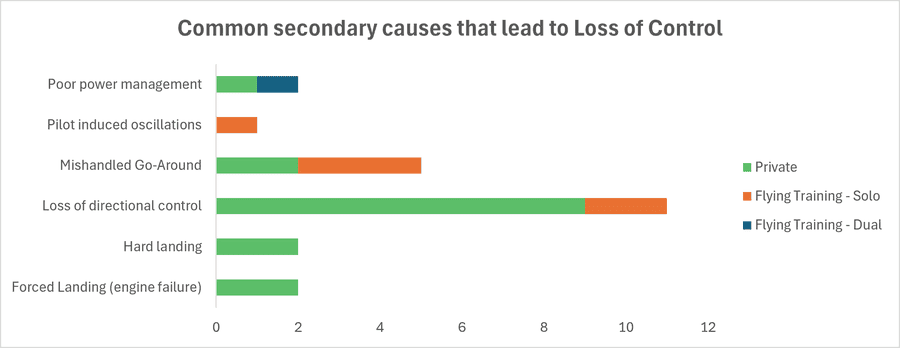
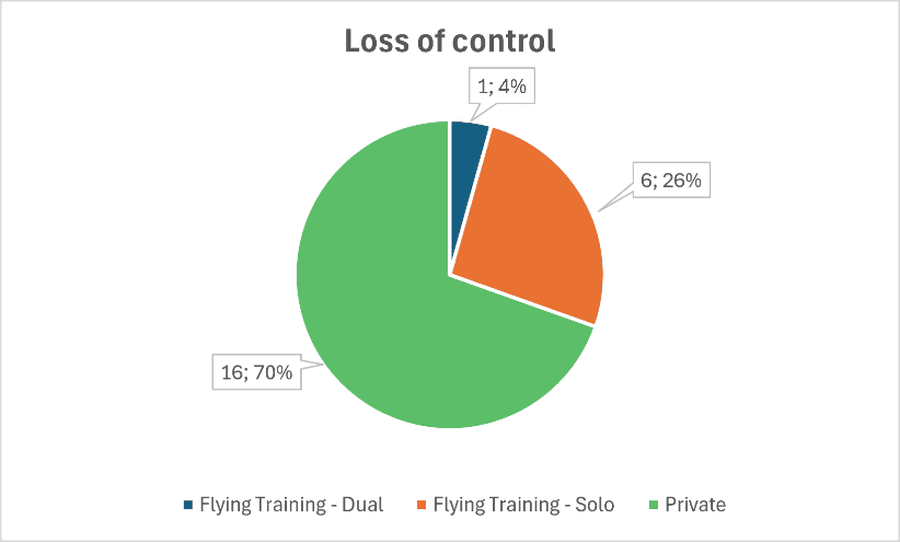
Loss of Control (LOC) continues to be a significant contributor to reported occurrences within recreational aviation in 2026 as well. Analysis of the available data (up to mid-August) indicates that LOC occurrences are predominantly associated with private operations, which account for 32 occurrences (69.57%), compared with 12 (26.09%) during solo flying training and 2 (4.35%) during dual flying training operations.
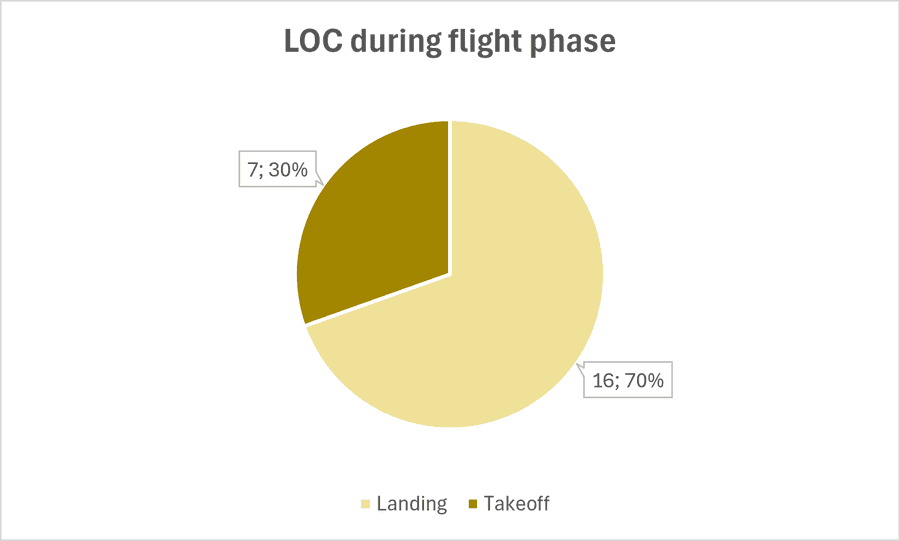
When the data is examined by flight phase, landing is the most commonly associated phase of flight, accounting for 32 occurrences (69.57%), while take-off accounted for the remaining 14 occurrences (30.43%). This highlights the importance of maintaining aircraft control and applying sound decision-making during the critical phases of take-off and landing.
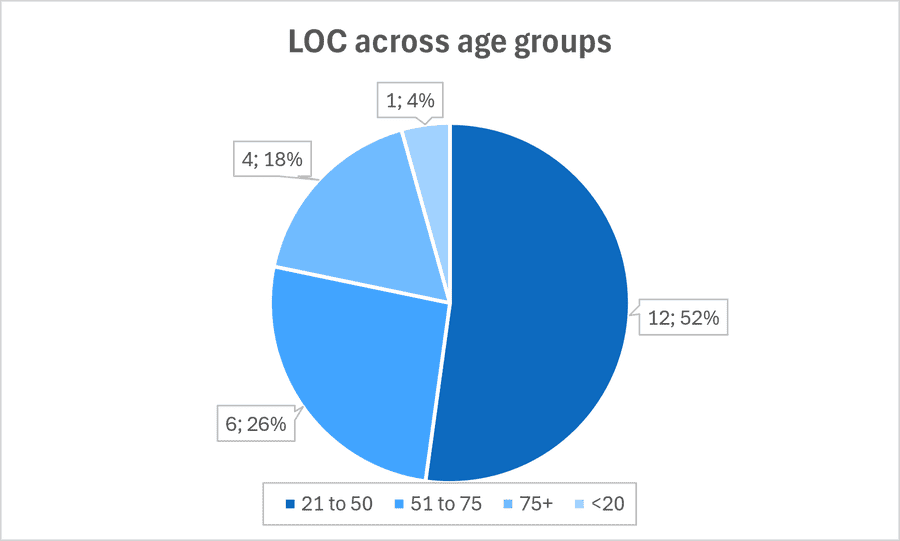
The available age-group data shows that the largest proportion of recorded LOC occurrences involved pilots aged 21–50 years, followed by those aged 51–75 years.
Smaller proportions were recorded among pilots aged over 75 and under 20 (possibly due to how the members’ ages are skewed).
RAAus Safety Promotions: Look out for the upcoming Sport Pilot edition and the National Safety Series edition in October 2026 for more interesting analyses and useful materials to help member update themselves of the risks associated with Loss of Control and the best practices to stay on top of your aircraft.
(Learn more: RAAus has developed a Loss of Control video series available through the Recreational Aviation Australia YouTube channel. The series provides practical information on the factors that can contribute to LOC and techniques pilots can use to better manage the risk. Take the time to watch the series and refresh your knowledge before your next flight.)
Loss of Control – Flight Training Schools
Loss of Control (LOC) continues to be one of the most significant contributors to reported occurrences. Our analysis shows that LOC is most frequently associated with landing and take-off, while solo training flights account for the largest proportion of the occurrences analysed.
This highlights the important role instructors play in preparing students to maintain aircraft control during these critical flight phases and, importantly, to recognise when a student is not yet ready to operate without instructional assistance.
The syllabus already provides the framework
The RAAus Syllabus of Flight Training establishes the minimum standards of knowledge and competency expected throughout training. Importantly, competency code 3 is the required competency for solo conduct of the intended operation. It requires the student to perform the activity correctly without instructional assistance under carefully supervised conditions and in a safe environment.
LOC rarely gives much warning. Use training to build confidence in managing variations in wind, approach, landing and aircraft handling, rather than focusing solely on repeating the same routine circuit. The syllabus also requires competency in normal, crosswind, short-field and other take-off and landing operations.
Some important questions Instructors should consider before releasing a student for solo flights:
- Can the student consistently maintain control?
- Can they recognise when an approach is no longer stable?
- Can they make the right decision without waiting for the instructor to intervene?
If the answer isn’t yes, more practice is needed.
A final reminder for instructors
- The LOC data tells us where the risk is.
- The RAAus syllabus tells us what competency is expected. Our role as instructors is to make sure the two meet.
Don’t send a student because they are ready to go solo. Send them because they are ready to fly safely without you.
Loss of Control – Private Pilots
Recreational flights for private purposes are not immune to risks associated with LOC related occurrences. In fact, they have the largest share in the pie chart, as the data shows. This is an important reminder that experience does not make us immune to loss of control.
Don’t let familiarity become complacency
- You’ve flown this aircraft before.
- You’ve landed at this strip before.
- You’ve flown in similar weather before.
So what could be different today?
- Wind
- Aircraft loading
- Runway conditions
- Your recency
- Your workload
Take a moment before each flight to consider what has changed and whether it changes your risk. Threat and error management is important.
Your certificate isn’t the end of learning
The RAAus training framework establishes the competency required for pilots to safely conduct operations without instructional assistance and to adjust their actions to cope with emergencies. But competency is not something we demonstrate once and then keep forever. Skills need to be maintained. Knowledge needs to be refreshed. And pilots need to keep learning.
Always take the opportunity to refresh your knowledge. Fly with an instructor occasionally, Seek feedback.
Some suggestions for RA-Pilots to help keep-up their good work and their joy of flying
- A refresher isn’t a step backwards. It’s an investment in staying sharp.
- New aircraft? Build experience first. Build experience progressively. Give yourself time to become comfortable with the aircraft before taking on more demanding operations.
- Know when to walk away. Make the right choice considering all the important factors before you hop into your aircraft.
Experience should make us better pilots not more complacent ones.