Thirteen years on the Board of Recreational Aviation Australia
Michael Linke, Chief Executive Officer · Nov 14, 2026
At our Annual General Meeting on 14 November, Michael “Mick” Monck will step down from the Board of Recreational Aviation Australia. He has served our members for 13 years, more than a decade of that as President and then Chair. I can’t think of anyone who has given more to recreational aviation in this country over that time, and on behalf of the Board, the staff and every one of our members, I want to take a moment to thank him properly.
Where it started
To understand what Mick gave RAAus, you have to remember where we were in 2013. The organisation was in real trouble. CASA audits had found serious shortcomings, restrictions followed, and the relationship with our regulator had broken down. Board members resigned, the executive changed more than once in a matter of months, and plenty of members wondered whether there would be an RAAus at all. Mick later described those years as a time when our failure to meet regulatory obligations had threatened the very existence of the organisation. He was not exaggerating.
The turning point came from the members themselves. In February 2013, more than 300 members gathered at a general meeting in Queanbeyan, just outside Canberra, many of them having paid their own way to get there. They asked for a different way of running their organisation: a board that governed, a professional team that managed, a proper strategy and a constitution fit for a national body. That meeting heralded a new era for recreational aviation in Australia, and Mick, together with twelve others, joined the Board on the strength of it.
That new Board had one job: get RAAus back on its feet. Mick was central to that from the very first day.
A strategist from the start
Mick brought something RAAus badly needed at that moment: a calm, strategic mind and a clear sense of what had to happen and in what order. He holds a first class honours degree in economics from the University of Adelaide and an MBA from Melbourne Business School, he is a graduate of the Australian Institute of Company Directors, and he is a pilot who holds both RAAus and CASA flight authorities. He understood governance, he understood aviation, and, just as importantly, he understood members.
Even in those early President’s reports, Mick was asking the hard question. While the sector was absorbing the federal Aviation Safety Regulation Review, he argued that RAAus should take a stocktake of itself and look honestly at its own organisation before asking anything of anyone else. That instinct, to fix our own house first and earn the right to ask for more, became the foundation for everything that followed.
By 2014 Mick was President, and he had already foreshadowed a major restructure: a smaller, workable board, lower board costs, and a clear line between governance and management.
The year he took a chance on me
In July 2014 the Board appointed me Chief Executive Officer. It came, for me, somewhat out of the blue, and I have never forgotten that Mick showed faith in me when he had every reason to play it safe. The Board deliberately chose the title of CEO rather than General Manager, to signal that the organisation would be run by a professional team accountable to an elected board. That was Mick’s thinking in action.
From that point we worked side by side for six years. Whatever we achieved together in that time, and I believe it was a great deal, rests on Mick’s leadership and his deep knowledge of the sector.
Rebuilding, one airfield at a time
I honestly can’t count the number of airfields we visited in 2014, 2015 and 2016. Mick almost single-handedly took the organisation back to its members. We went to airfields in every state and territory, to flying clubs right across the country, and to member forums of every size. Some days it was two or three members in a hangar. Other days it was a room of hundreds. Every one of those conversations mattered to him.
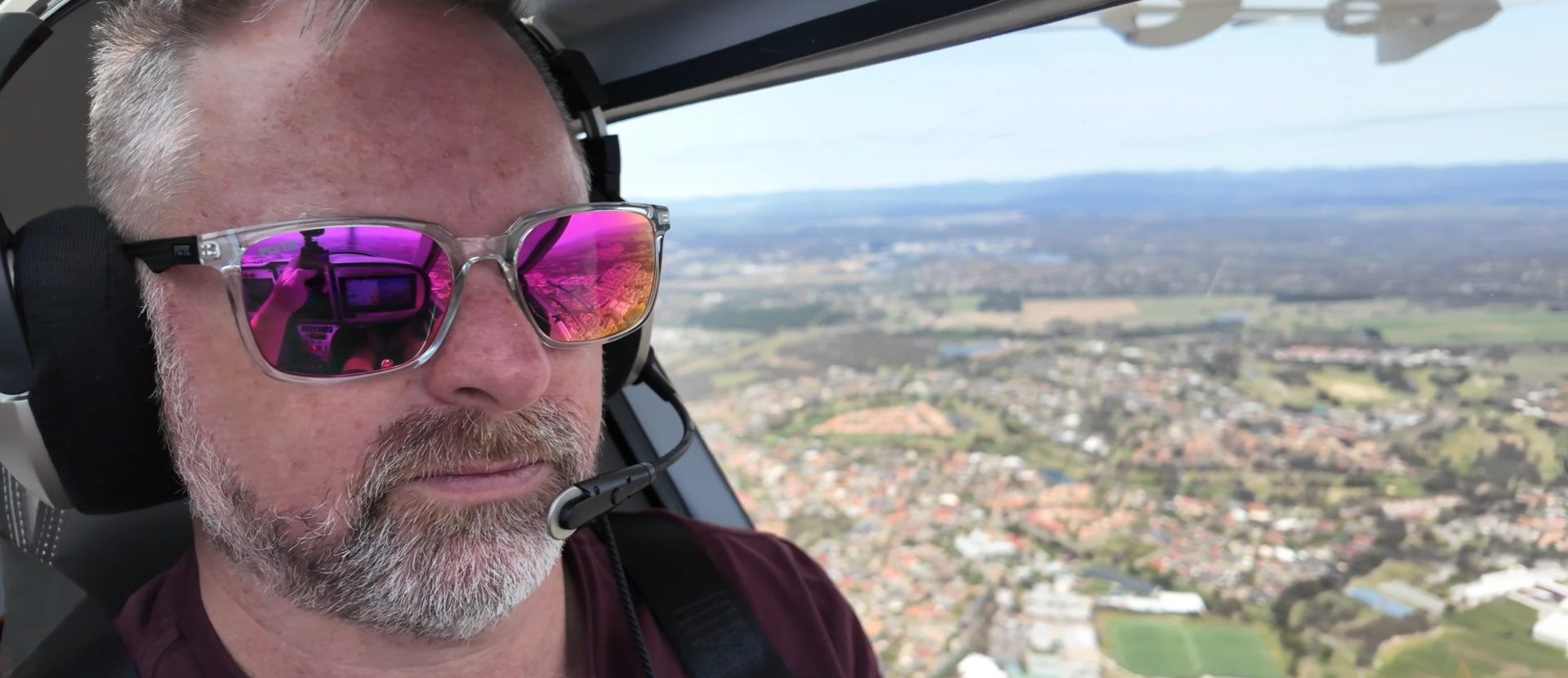
Mick did the flying and the driving. I navigated. Many of my best memories of those years are of the hours in the car or the cockpit between stops, talking about RAAus: what we had heard that day, what we could do better, how we could make the organisation work for the people who own it. His focus never wavered. It was always about making RAAus better for members, better for the sector and better for aviation.
That effort was noticed. By the time of the 2016 board elections, members were openly crediting the renovation of RAAus, and the pace of positive change, to the partnership Mick had built.
The architect of a modern RAAus
Mick was the architect of the RAAus we know today.
A new constitution and a new structure. In May 2016, members voted to move RAAus from an ACT incorporated association to a national company limited by guarantee under the Corporations Act. Mick led that reform and was one of the initial directors who signed the application to register the new company. It replaced a large board of regional representatives with a eight-member board elected by all members, and it put RAAus on the same governance footing as the national bodies it works alongside. The current RAAus Constitution still carries the structure he designed.
Governance that holds up. Mick built the governance policies, member charter and board processes that sit behind that constitution. They are the reason RAAus can now be audited, challenged and held to account, and come through it.
A mandate from members. At the 2017 election Mick topped the poll with 634 votes, almost double the next candidate. Members knew what he had done and asked him to keep doing it. They returned him again in 2020 and in 2023.
An organisation that grew. By late 2018, RAAus was administering almost 10,000 pilots, some 3,300 registered aircraft and around 160 flight training schools across Australia, many of them in rural and remote communities.
Restoring trust with the regulator and the sector
Beyond the members, Mick played a pivotal role in rebuilding confidence with CASA and with the broader aviation community. He did it patiently, through evidence, consistency and showing up. RAAus took its seat on the Aviation Safety Advisory Panel and its technical working groups, at the Sport Aviation Safety Forum, and in the national conversations about the future of general aviation.
Mick has been a member of the Australian Government’s General Aviation Advisory Network since March 2017, advising successive Ministers on the future of the sector, and he was reappointed in December 2024 for a term that runs to 2027. He is also a member of ASTM International’s F37 committee, which writes the consensus standards for light sport aircraft used around the world. In January 2026 he became the technical contact for a new F37 standard on systems and equipment for light sport aircraft. Few people in Australian recreational aviation have that kind of standing internationally.
His advocacy laid the foundation for many of the privileges our members are starting to enjoy today:
- Controlled airspace. In 2018 RAAus reached the first milestone on the path to controlled airspace access, allowing members to fly flight training school aircraft into the airspace around those schools. In December 2024 CASA announced it would extend Class C and D access to Recreational Pilot Certificate holders, and the Civil Aviation Orders have since been amended to allow it.
- Part 149. Mick steered RAAus towards becoming an Approved Self-administering Aviation Organisation. Our CASR Part 149 certificate took effect on 31 March 2021, making RAAus only the second organisation in Australia to achieve it.
- Heavier aircraft, MOSAIC and eVTOL. The conversations we are now having with CASA about heavier aircraft, MOSAIC and the next generation of electric and vertical take-off aircraft are only possible because of the credibility built in those early years. Mick’s work on international standards gives RAAus a voice in exactly the place those aircraft are being defined.
None of these outcomes belongs to one person, and Mick would be the first to say so. But each of them traces back to the work he did when RAAus had very little credibility left to spend.
Steady through the hard years
Leadership is tested when things get difficult, and Mick led RAAus through some very difficult periods. When COVID-19 grounded much of the country, he kept the Board focused on what members needed. In November 2020 the Board approved a new affiliate membership class, a low-cost way for people to stay connected with RAAus, along with a national membership drive for 2021. He led the development of our Strategic Plan 2023 to 2025, and the Board under his chairmanship laid the groundwork for the Strategic Plan 2025 to 2030 before he handed the chair to Simon Ozanne in early 2026.
Even then, he did not step back. In his final months on the Board, Mick was still reading our MOSAIC submission line by line and sending back detailed comments. That is who he is.
Thirteen years, all of it volunteered
I think some people don’t fully appreciate the time and effort this role takes, so it is worth saying plainly: Mick has done all of this as a volunteer. Thirteen years. Board meetings on Saturdays and in the evenings. Whole weekends at airshows and fly-ins. Phone calls, papers, submissions, forums, committee meetings, and countless hours on the road and in the air. Hundreds, if not thousands, of hours invested in RAAus, without payment and usually without thanks.
We owe him a debt of gratitude.
A personal note
I first met Mick in those early, turbulent days, and I have been lucky to call him a friend ever since. That friendship has lasted through my first term as CEO, through the years I was away from RAAus, and through my return this year. I am sure it will last a lot longer.
Mick is a passionate aviator. He is passionate about the success of our sector and passionate about the success of Recreational Aviation Australia. Without him, over the last 13 years, we simply would not be where we are today.
He is not leaving aviation. He will take his skills into other areas of the sector, and I look forward to tapping into his knowledge from time to time. I suspect many of us will.
Thank you, Mick
I’d ask every member to pause for a moment and think about where RAAus is today, and where it could have been without Mick. His fingerprints are on our constitution, our governance, our relationship with CASA, our standing in the sector and the privileges our members now enjoy. They are indelible.
We are better for having had Mick on our Board for 13 years. I join with the Board, the staff and every member of RAAus in thanking him for his time, his effort and his care, and in wishing him every success in whatever comes next.
Thank you, Mick. I am forever grateful.
Michael Linke
Chief Executive Officer,
Mick’s years at a glance
| Year | Milestone |
| 2013 | More than 300 members attend the Queanbeyan general meeting in February. Mick joins the Board as part of the new era that follows. |
| 2014 | Mick serving as President. Michael Linke appointed CEO in July. Board restructure foreshadowed. |
| 2014 – 2016 | Member forums and airfield visits in every state and territory. |
| 2016 | Members vote in May to convert RAAus to a company limited by guarantee. Mick is an initial director of RAAus Ltd and Chair of the new seven-member national board. |
| 2017 | Re-elected at the top of the poll. Appointed to the General Aviation Advisory Network in March. |
| 2018 | First milestone towards controlled airspace access for RAAus members. |
| 2020 | Re-elected and returned as Chair in November. Affiliate membership created. |
| 2021 | CASR Part 149 certificate takes effect on 31 March. RAAus is the second ASAO in Australia. |
| 2023 | Re-elected to the Board. Strategic Plan 2023 to 2025 delivered. |
| 2024 | Reappointed to the General Aviation Advisory Network. CASA announces controlled airspace access for RPC holders. |
| 2026 | Hands the chair to Simon Ozanne. Technical contact for a new ASTM F37 light sport aircraft standard. Retires from the Board at the AGM on 14 November. |